
The Luxury Travel Magazine
The Luxury Travel Magazine

The first decision in choosing leather luggage is whether to choose leather at all. For a luxury long weekend the honest answer is: often, but not always. Leather luggage looks and ages like nothing else on the carousel, and for some trips and some travelers a hardshell is simply the smarter buy.
Get that first call right and the rest is detail: the grade of the leather, how it is built, the size for two to four nights, and the trade-offs you accept in exchange for the way it looks.
Buy leather if you carry it on and care how it looks and lasts; buy a hardshell if you check bags or need the lightest, most crushproof option. That is the whole decision in a line, and for a long weekend, where you are almost always carrying on, leather has the edge more often than not.
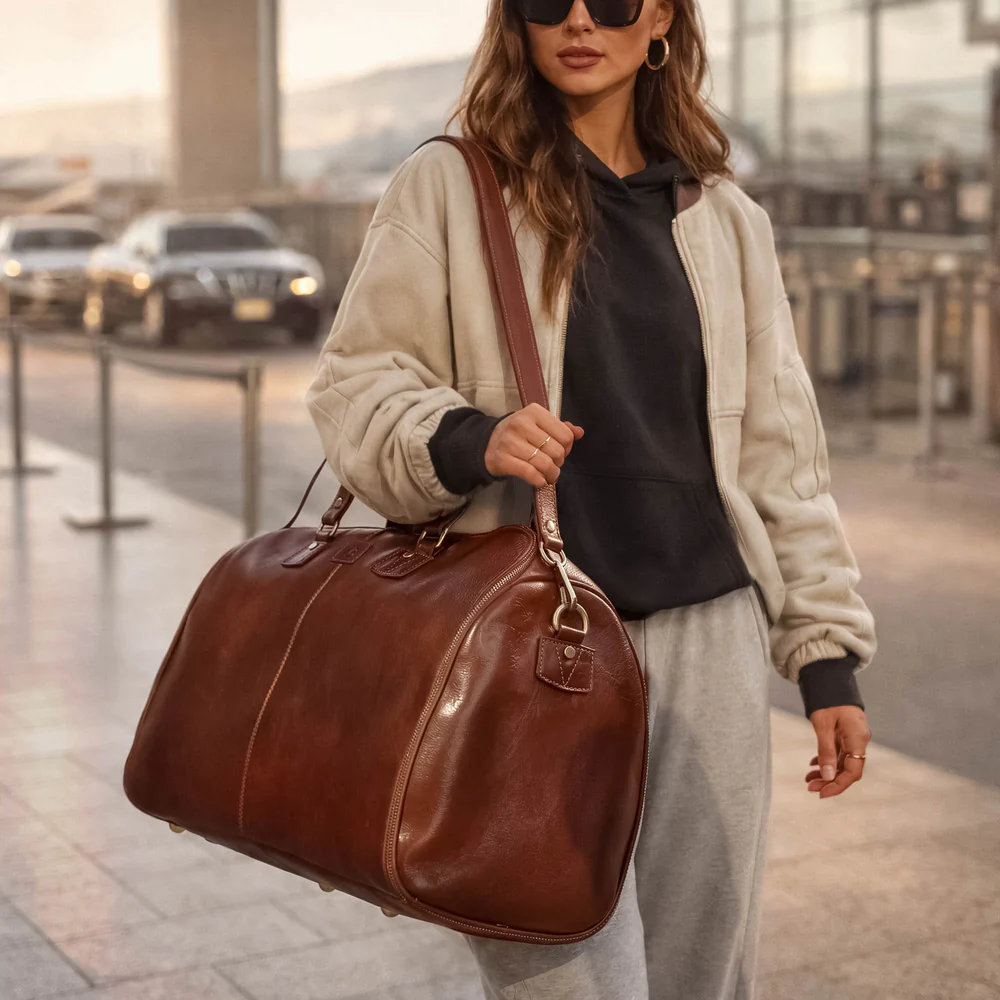
The case for leather is mostly how it ages. A good leather case softens, deepens in color and takes on a patina a molded shell never will, so ten years in it looks like something, where polycarbonate just looks scuffed (source). It also lands differently walking into a hotel, which for a certain kind of trip is part of the point.
The case against is weight and protection. Leather is heavier than polycarbonate, so if you are forever fighting the airline’s carry-on weight limit, that counts against it. A hardshell also takes a beating from baggage handlers better, so if you check your luggage, the shell earns its keep. For a carry-on long weekend neither drawback bites hard, which is exactly why leather makes sense for this trip.
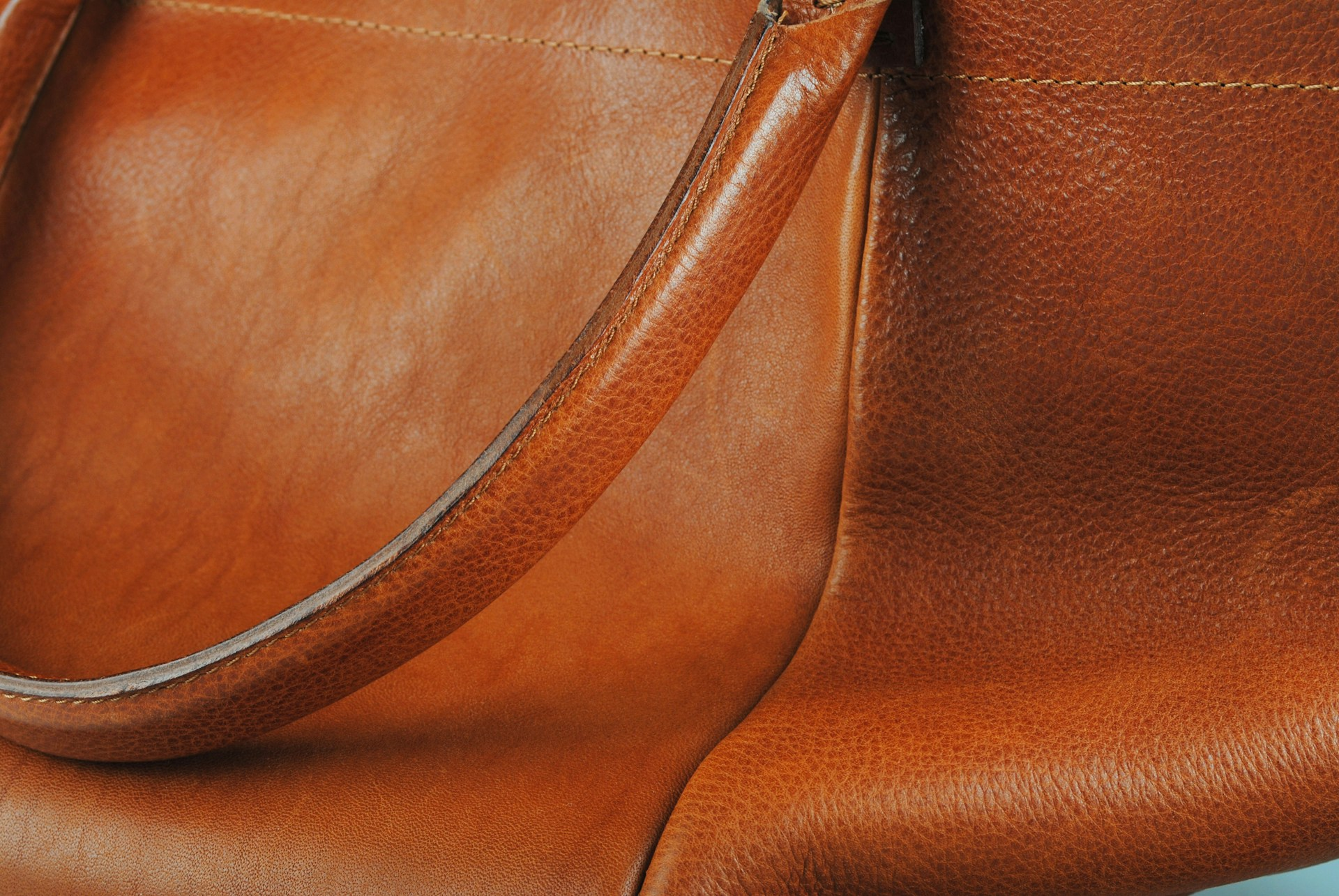
Look at the leather grade and the construction, in that order, and ignore the marketing in between. Two cases at the same price can be a decade apart in how they age, and the gap is visible once you know where to look.
On grade, only full-grain really earns a place on luggage. It is the outer layer of the hide left intact, which is what lets it age into character; the lesser grades are mostly shortcuts around that surface. Top-grain is buffed smooth and coated, so it looks consistent at first and then lifts or splits where the case flexes most. Anything labeled just “genuine” sits a rung below that, and “bonded” is leather in name only: scraps bound to a backing sheet. For a case you want to keep, full-grain is the line not to drop below.
On construction, judge the parts that take the strain. Stitching should be tight and even, edges sealed and smooth rather than raw or thickly painted, and the lining a real fabric that will not shred (source). On wheeled cases the wheels and handle are the first things to fail, so look for spinner wheels that roll smoothly and a telescoping handle that extends and locks without wobble. None of this shows up in a product listing; ten minutes with the case in person does.
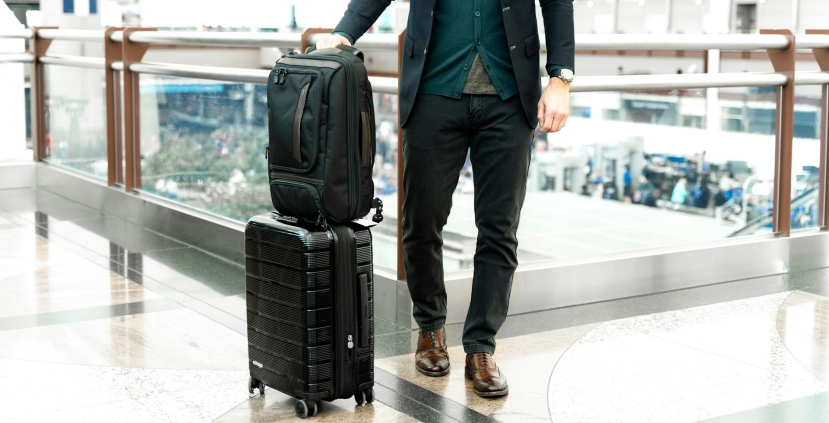
Carry-on size, almost always: a case that clears the cabin and holds three or four days. A long weekend is two or three outfits, something for the evening and a toiletry kit, which a carry-on holds without forcing you to check a thing.
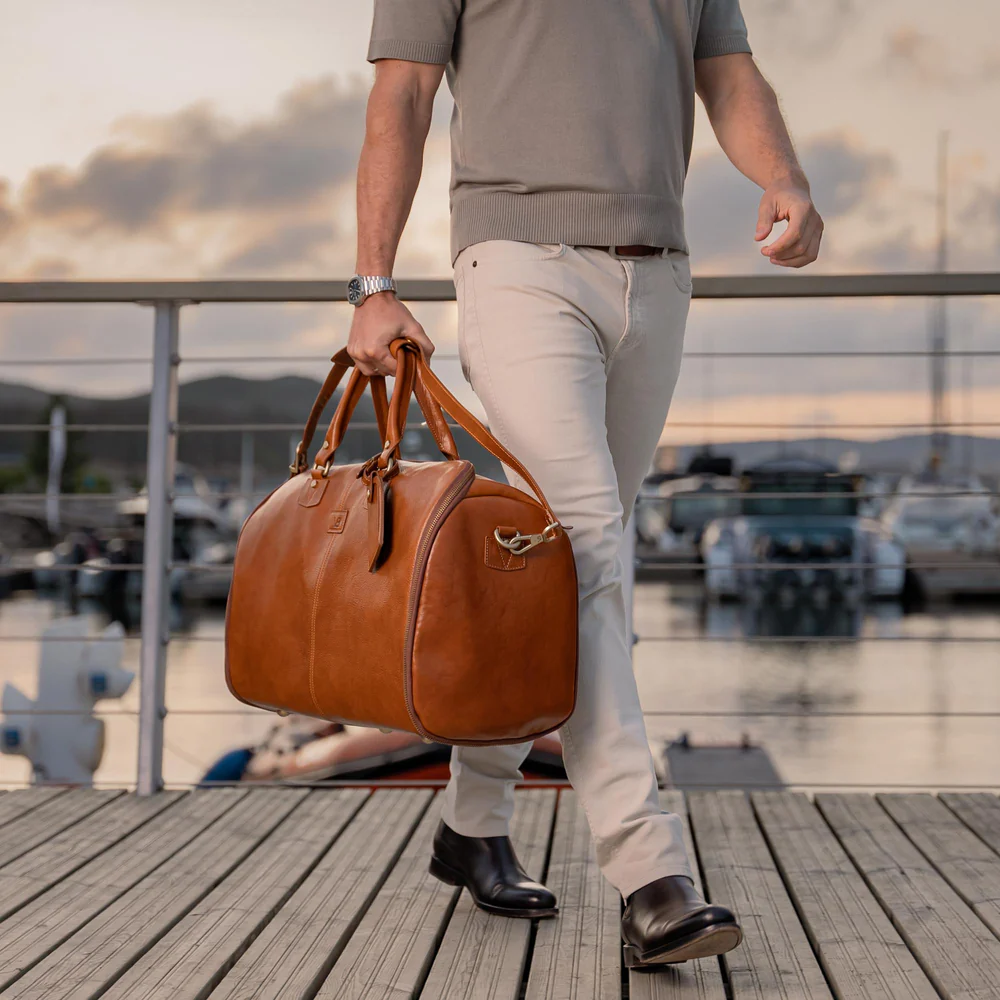
A bigger case costs more than it gives back on a long weekend. It weighs more before anything goes in, invites you to fill the extra space, and quietly turns a carry-on weekend into a checked-bag trip. The occasional week away is better handled with a second, larger case kept for those trips than by oversizing the one you reach for most weekends. With leather, empty weight matters more than usual, since it starts heavier than a shell and the cabin limit does not move.
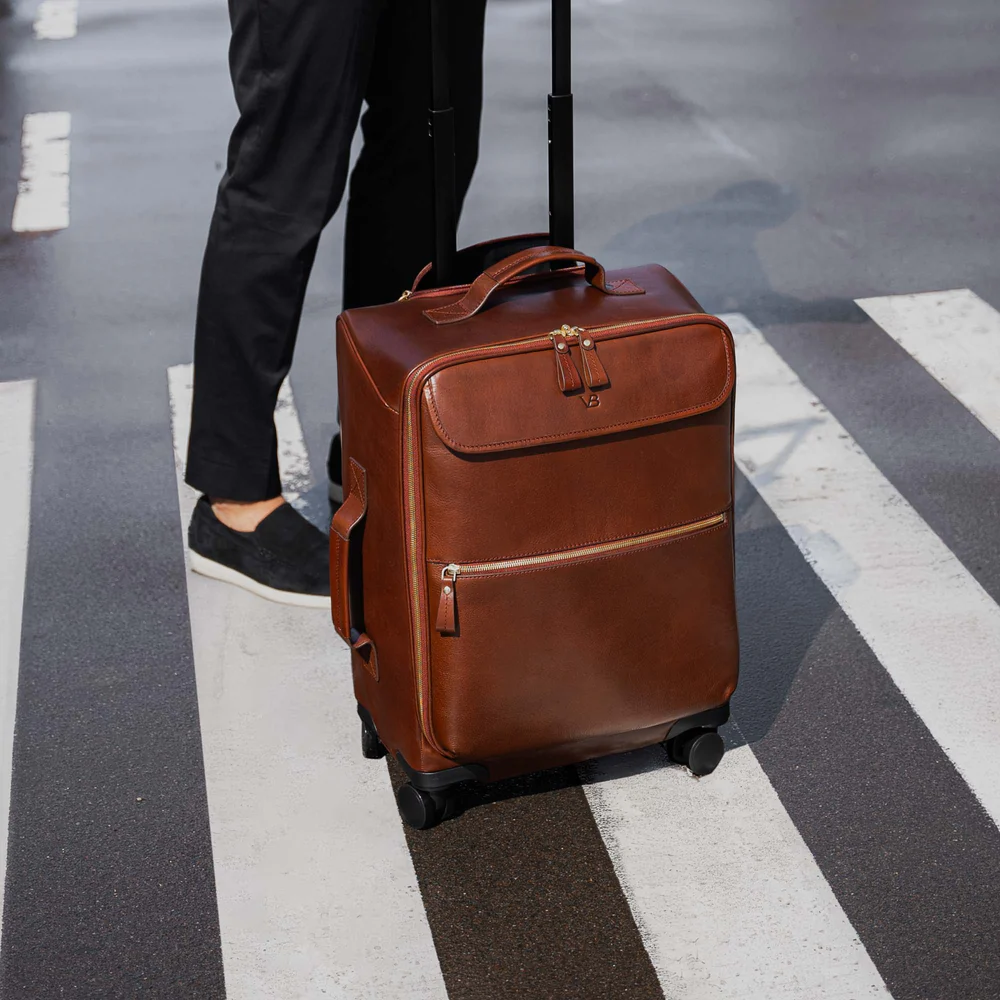
If you don’t mind paying a premium, Von Baer’s leather luggage is a good option. Von Baer, an international leather-goods brand best known for its business and travel bags, lines its wheeled carry-on in fine Italian cotton canvas instead of the molded synthetic most hardshells use, which is part of why a leather case feels different to live with over the years.
It rolls on 360-degree spinner wheels with a two-stage telescoping handle, so choosing leather over a hardshell does not cost you the modern conveniences. The trade-offs are the honest ones from earlier: at around 9 lb (4 kg) it is heavier than a polycarbonate shell, and it is a premium buy, so if you routinely check a bag or want the lightest possible carry-on, a hardshell still makes more sense. For the traveler who wants luggage that looks and ages like luggage used to in a professional way, it is a strong place to land.
The big mistakes: paying for a logo instead of a hide, ignoring the wheels and handle, and oversizing. Each is common, each is expensive, and each is avoidable.
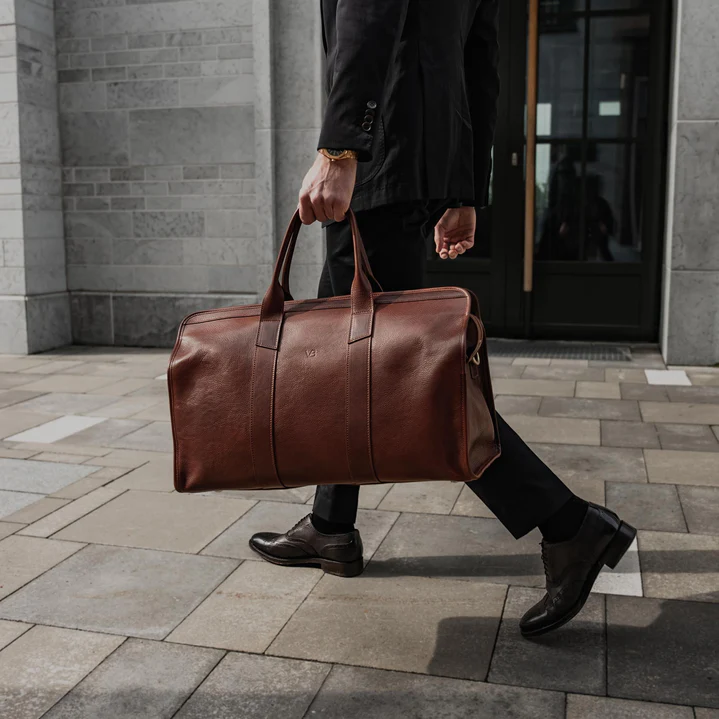
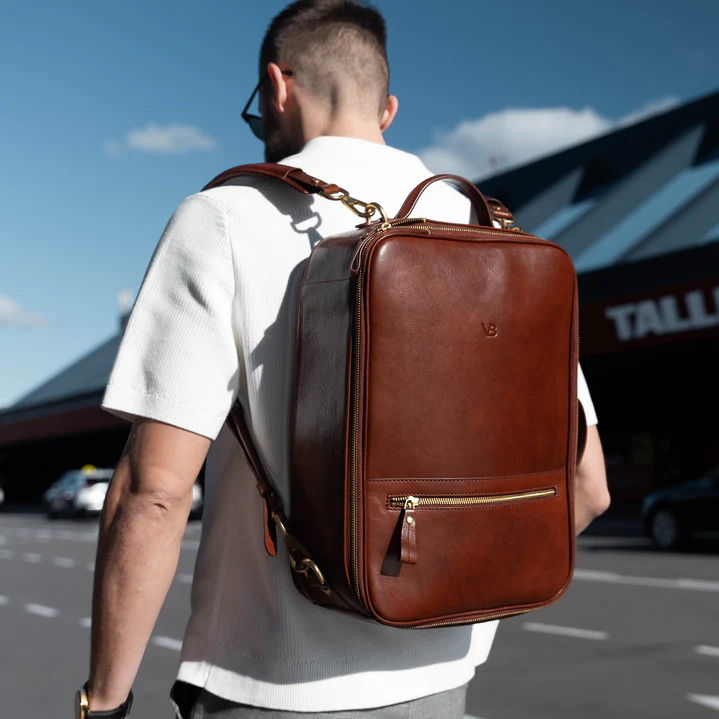
Leather luggage is something you choose rarely and travel with for years, so the time spent getting it right pays off. Decide whether leather suits how you travel, hold out for full-grain and honest construction, size it for the long weekends you actually take, and accept the trade-offs with open eyes. Do that and you end up with a case that looks better the longer you own it, and earns its place on every weekend you take it.